
Two-Player Connect6 on One Device
Sit Together and Confirm Two Stones
Put the phone or tablet between you. There is no room to create. Black places one stone, then each turn must land two stones before the device changes hands. Agree first whether a miss can be undone, and if you are keeping score, swap colors after the first game.
Before you start
Keep the screen still. Black places one stone near the center; White’s first turn already uses two stones.
Tell a new player two facts: the stones need not touch, and the first pending stone can be cancelled before the second is set.
Decide whether undo is allowed. For a match, play two games so each person sits Black once.
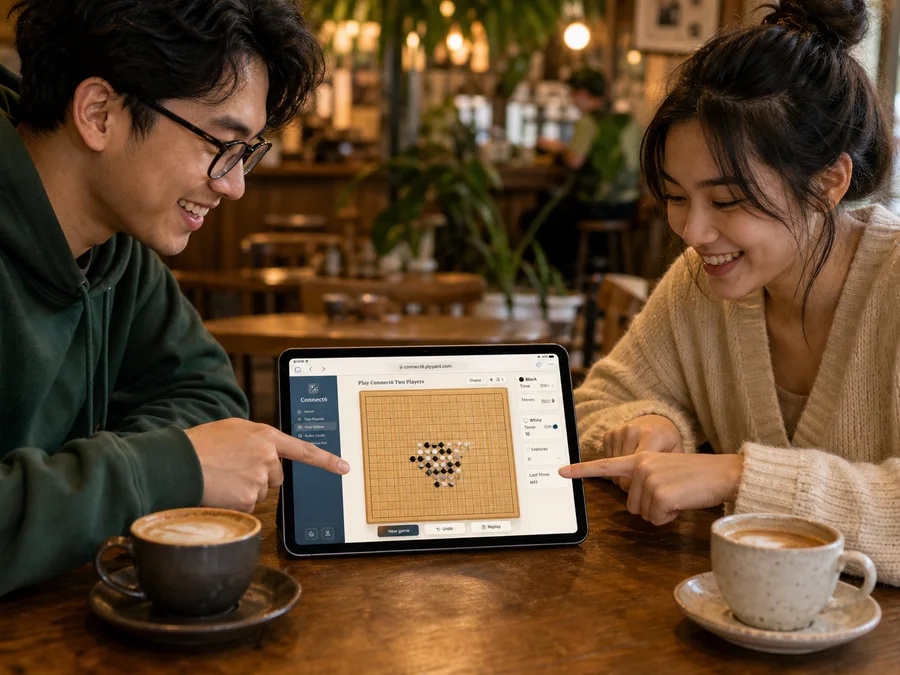
Watch How Many Stones This Turn Still Needs
The status line shows who is to play. Black’s opening stone finishes the turn by itself. Later turns keep a pending ring on the first stone; tap it again to cancel. Hand the device over only after both stones are committed.
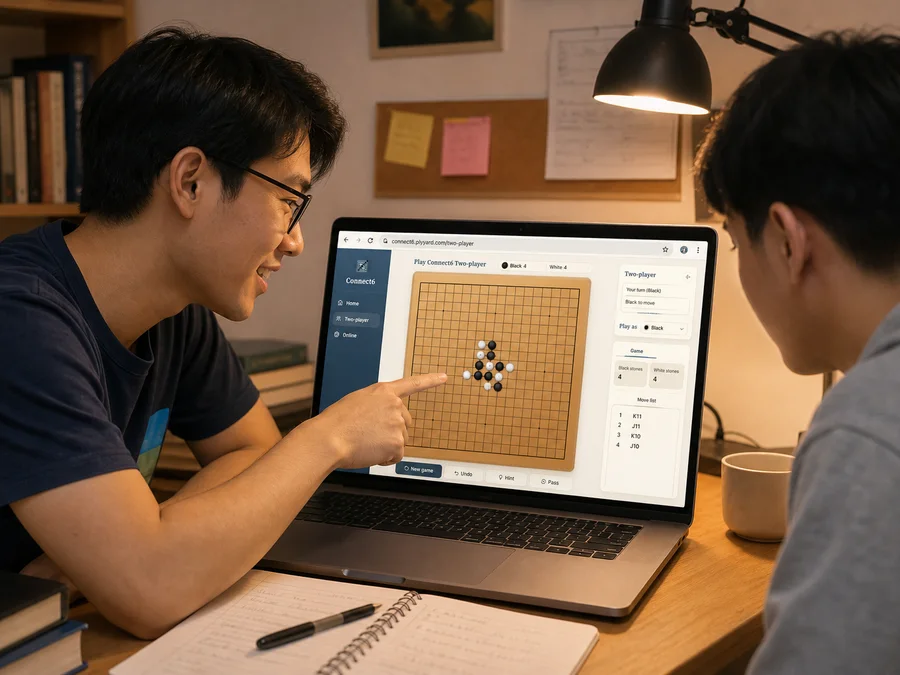
Count the Line, Not Whether the Pair Touches
The two stones may land at opposite ends of the board. A common mix-up is treating them as two separate turns, or importing Gomoku’s live four. The move list records one row per turn, with coordinates joined by a plus sign.
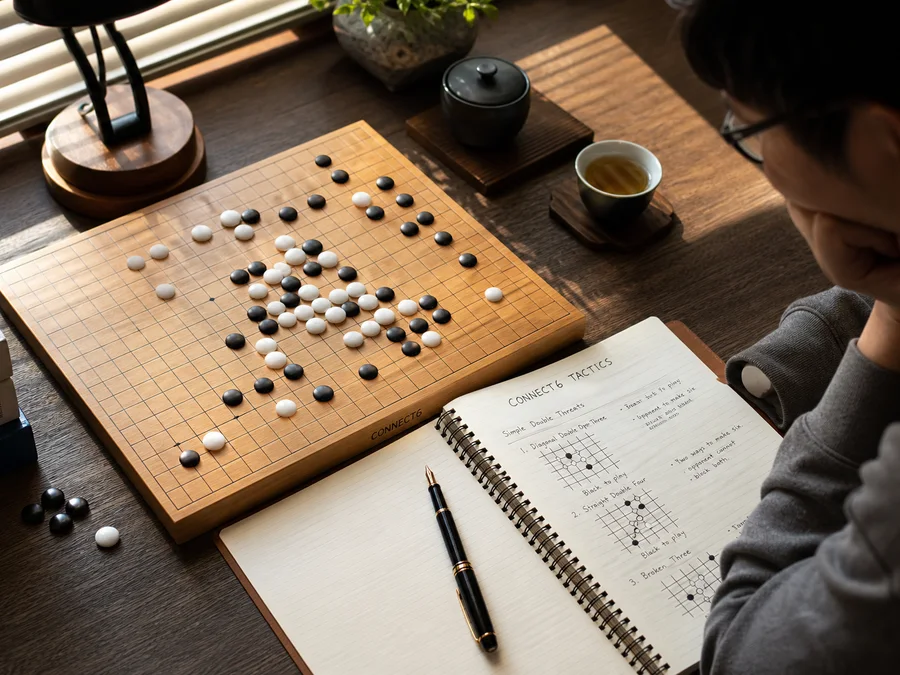
Two Games, Swap Black
Black always places the single opening stone, so a two-game set is the fairest score. Agree on undo before the first stone. Replay a disputed turn to see both stones together instead of reconstructing from memory.
2Players
1Shared device
BlackAlways opens
2 gamesOne set swapping Black
